The Story of California Coastal Cleanup Day.
Every September, hundreds of thousands of volunteers around the world roll up their sleeves, pick up trash grabbers and head to their nearest shoreline. What many don’t realize is that this global movement traces its roots directly to a grassroots movement in Northern California.
What began as a localized response to beach litter in the late 1970s has transformed into one of the largest single-day volunteer environmental efforts in world history.
The Humboldt County Spark (1979–1981)
Long before the official statewide event existed, residents in Humboldt County decided they had seen enough litter along their shores. In 1979, community member Joe Abbott and his wife Ann Morrissey teamed up to address the growing garbage problem along local beaches.
Collaborating with the Northcoast Environmental Center (NEC) led by Tim McKay and Sid Dominitz they launched the Beach Beautification Project. The inaugural effort removed more than 34,000 pounds of trash from 110 miles of shoreline. Two years later, the NEC joined forces with the Arcata Recycling Center to launch California’s very first Adopt-A-Beach program.
A Statewide Movement Takes Off (1984–1985)
In 1984, Oregon resident Judy Neilson organized “Plague of Plastics,” the first statewide beach cleanup event in the U.S. Inspired by these local and regional efforts, the California Coastal Commission established California Coastal Cleanup Day in 1985.
In its first year, roughly 2,500 volunteers participated. Since then, the numbers have grown exponentially:
- 1.6+ Million Volunteers have participated since 1985.
- 26+ Million Pounds of Trash have been diverted from ocean ecosystems.
- Guinness World Record (1993): Recognized as the largest organized single-day garbage collection event, with 50,405 volunteers in a single day.
The California model quickly spread. In 1986, the Ocean Conservancy launched a similar effort in Texas, collaborating with the Coastal Commission to expand the concept into what is now the International Coastal Cleanup, spanning all 50 U.S. states and over 100 countries.
More Than Cleaning Up: Data Driving Policy
While picking up marine debris protects wildlife immediately, the lasting impact of Coastal Cleanup Day comes from the data volunteers record on tally sheets.
By categorizing every bottle cap, straw, and wrapper, volunteers create a massive long-term dataset used by researchers and lawmakers to address waste at the source.
What Gets Collected Most? (1988–2023 Data)
| Rank | Debris Category | Total Items Collected | Share of All Debris |
| #1 | Cigarettes / Filters | 8,403,338 | 35.34% |
| #2 | Food Wrappers / Containers | 2,592,161 | 10.90% |
| #3 | Caps / Lids | 2,207,929 | 9.28% |
| #4 | Bags (Paper & Plastic) | 1,723,026 | 7.25% |
| #5 | Cups, Plates & Utensils | 1,268,781 | 5.34% |
(Source: California Coastal Commission)
From Data to Legislation
This volunteer-collected data has directly shaped local and state environmental policy:
- Plastic Bag Bans: In 1998, plastic bags were the 5th most common item found on California beaches. Following California’s statewide ban on single-use plastic bags in 2016, bag debris dropped significantly and fell off the top 10 list by 2017.
- Targeted Legislation: Cleanup metrics provided critical evidence supporting bans on polystyrene (foam) food packaging, single-use plastic straws, and stricter stormwater runoff regulations designed to trap trash before it reaches ocean waters.
Moving Inland
To solve marine debris, cleanups can’t stay on the sand. Because wind and stormwater drains carry inland litter into creeks, rivers, and ultimately the ocean, Coastal Cleanup Day expanded into nearly every California county—reaching urban centers, lakes, and inland waterways.
Picking up trash in your local park or neighborhood stormwater drainage area directly protects marine life miles away.
How to Get Involved
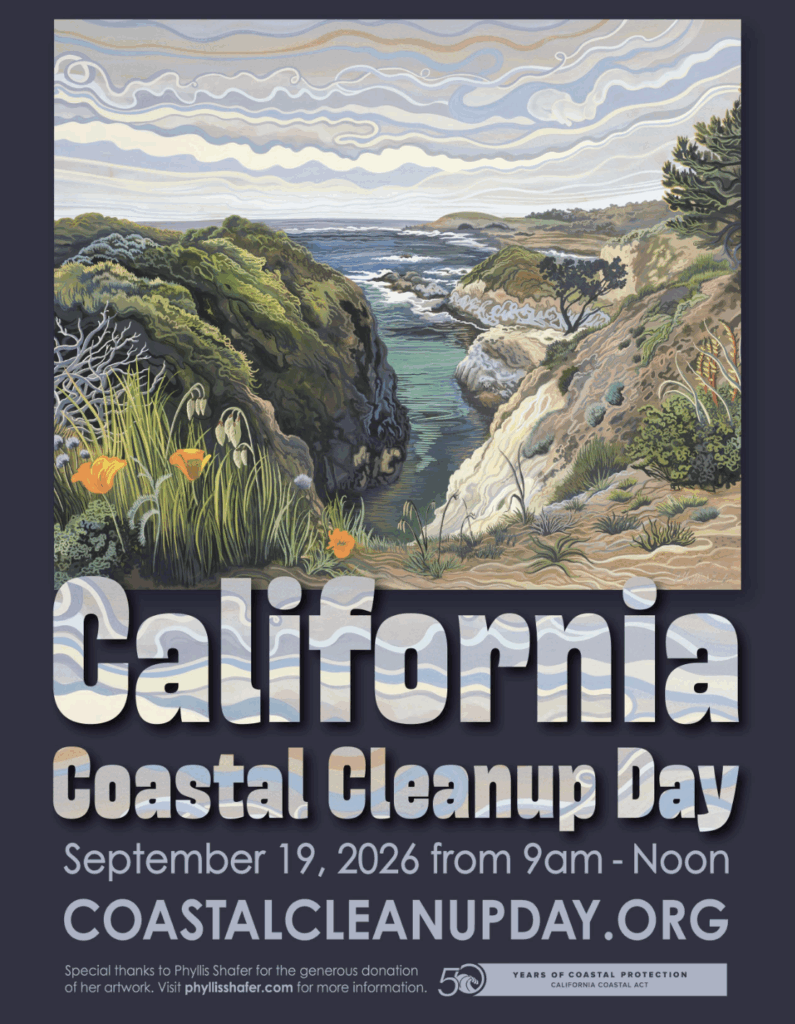
California Coastal Cleanup Day takes place annually every September. You can find local cleanup sites, download digital data-tracking apps (like Clean Swell), or host a neighborhood cleanup by visiting the California Coastal Commission Public Education Portal.